
Government | Residents | Business | Visitors | Search | Directory | Feedback | HOME

Sedgwick County, Kansas COMCARE ...working for you
Sedgwick County...working for you
635 N. Main  ▪  Wichita, KS 67203  ▪  Tel: (316) 660-7600  ▪  TTY: (316) 267-0267  ▪  Fax: (316) 660-7510
24 Hour Crisis Line (316) 660-7500
Marilyn Cook, LSCSW - Executive Director

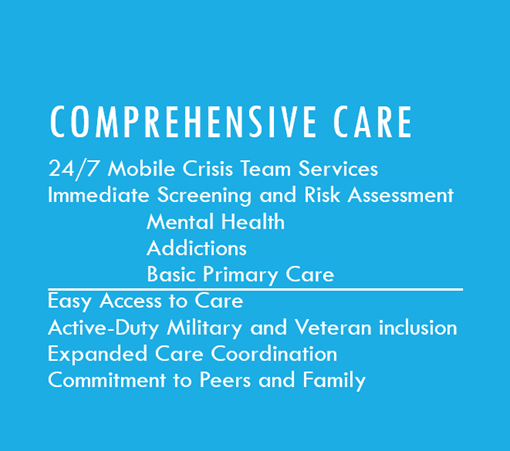
COMCARE provides a wide array of mental health and substance abuse services to residents of Sedgwick County. COMCARE is the largest of the 27 Community Mental Health Centers in the State of Kansas and is committed to helping individuals served lead more productive lives.

As the local mental health authority for Sedgwick County, COMCARE is the safety net for individuals in need of mental health services that cannot afford to obtain them elsewhere in the community. Good mental health is as critical as sound physical health.  COMCARE serves over 14,000 individuals in the community and with the help of a significant number of community partners.

COMCARE's quality comprehensive services are prioritized and provided for all citizens regardless of ability to pay.  Services are provided in the most cost efficient and cost-effective manner.  Sedgwick County provides programs which are accessible to the public without regard to race, color, national origin, sex, age, religious or political affiliations, disability, or status as a disabled or Vietnam-era veteran.

News and Events

New Articles

Suicide Prevention Coalition 2008 Annual Report

Read about the goals, challenges and achievements of the Suicide Prevention Coalition in 2008 by clicking here.

Hope for People with Mental Illness and Substance Use Disorders

HealthNewsDigest.com - Next year, a decade after the Surgeon General’s Report on mental health revealed that mental illnesses are as treatable as physical illnesses, there also appears to be hope for people with mental illnesses. The healthcare reform legislation currently being debated in Congress includes historic provisions to expand health coverage and significantly improve access to mental health and substance use disorder treatment services.

Healthcare reform in America is as much an economic issue as a moral one. The economic, social and human costs of mental health and addictions disorders in the U.S. are enormous. Mental illness drains our economy of more than $80 billion every year, accounting for 15 percent of the total economic burden of all disease. Alcohol and drug abuse contributes to the death of more than 100,000 Americans and costs upwards of half a trillion dollars a year, while a quarter of all Social Security disability payments are for individuals with mental illness.

The promise of reform is arriving at a critical time in this country—demand for mental health and substance use treatment is up just as state budgets for these types of services are being severely reduced. Due in part to the current economic turmoil, community mental health and substance use treatment centers nationwide are experiencing a 20 percent increase in demand for services, according to a recent survey by the National Council for Community Behavioral Healthcare. At the same time demand is increasing, at least 32 states are known to be enacting funding cuts — reducing services and closing programs.

One of the most crucial components of the healthcare reform legislation now being debated is the concept of parity. The bill includes the principles contained in the Paul Wellstone and Pete Domenici Mental Health Parity and Addiction Equity Act, the federal law passed last year which prohibits unequal treatment limits and financial requirements for mental health and substance use treatment. The parity provisions are essential given that mental health and substance use treatment have traditionally been subject to blatantly discriminatory limits on coverage that restrict access to effective and, at times, lifesaving therapies.

Millions of Americans have mental health and substance use disorders and many still do not have access to treatment. Unlike most physical disorders, these conditions start at an early age and often go untreated until the illness becomes debilitating. The delay in treatment often interferes with a young person’s ability to succeed in school and in the workplace. As a result, many people with mental health and substance use disorders are unemployed or work in low-paying jobs without health insurance and they will greatly benefit from expanded insurance coverage.

While healthcare reform is not a panacea for people with mental illnesses and substance use disorders, it takes groundbreaking steps in the right direction and may help stem the escalating death rates of people with serious mental illnesses. People in the U.S. with schizophrenia, bipolar disorder and other serious mental illnesses die years sooner than other Americans. Three out of every five people with these types of mental illnesses die from preventable, co-occurring chronic diseases such as asthma, diabetes, cancer, heart disease and cardiopulmonary conditions.

As we enter 2010, the tragic fact remains that a majority of Americans with mental illnesses and addictions do not get treatment.  Healthcare reform holds the promise of greatly increasing access to mental health and substance-use services. Reform will finally open the treatment doors for some of the most vulnerable citizens in our society, and community behavioral health centers will be ready to help them lead full and productive lives.

Linda Rosenberg, MSWMs, president and CEO of the National Council for Community Behavioral Healthcare.

Wichita Transit Adds Bike Racks to Buses

The Wichita Transit Department has added bike racks to all of the transit buses to accommodate the needs of riders. Each bus is equipped with one bike rack, which can hold two bicycles. The bike racks increase transportation options by allowing a bicycle trip to be incorporated with public transportation. There are 48 city buses that travel 18 fixed routes.

"Transit riders have been asking for the bike racks and we are excited to meet their needs," Wichita Transit Director Mike Vinson said. "We now are able to connect these two important modes of transportation. We believe the racks will increase ridership and help reduce pollution by encouraging the use of public transportation and bicycles."

There is no extra charge to riders who use the bike racks. An ARRA stimulus fund grant of $24,000 paid for the racks. For more information about transit services, visit www.wichita.gov or call the information line at 265-7221.

COMCARE Connection

COMCARE of Sedgwick County periodically releases a newsletter - COMCARE Connection - providing a window into the work this department is doing in our community. 

The Economy and Suicide

The current world economic crisis has led to increased media and personal interest in the relationship between the economy and suicide.  Click here to read more about this topic from the American Association of Suicidology.

If a family member or friend mentions suicide, take it seriously. Call the Suicide Prevention Hotline, 316-660-7500.

Sedgwick County Prescription Discount Card

Since 2004, Sedgwick County has partnered with the National Association of Counties and Caremark to provide Prescription Discount Cards free of charge to uninsured and underinsured residents of Sedgwick County. The discount card provides individuals an average 18% discount on their prescription drugs. For more information on this program and to learn how to receive a card, email or call Brandi Clarke at 660-7673.

Dealing with the Stress of a Pandemic

As information is presented about the influenza (H1N1) outbreak, it is natural to be concerned about what may happen.  Some may even feel a bit overwhelmed about the things seen and talked about in the media or by people around us. To find out more about the signs of stress and how to talk to your kids, see the links below. For more information, call COMCARE of Sedgwick County, 660-7540 or the Crisis Help Line, 660-7500.

Mental Health Parity Becomes Law

Mental health advocates marked 2008 as a year in which they helped win passage of a landmark law to bring mental health parity protection to more than 100 million Americans covered by group health insurance. Passage of the Paul Wellstone and Pete Domenici Mental Health Parity and Addiction Equity Act owes much to a relentless battle waged in order to educate lawmakers, win their support for comprehensive parity legislation, and persuade them to make parity’s enactment a vital priority.

Also achieved was another critical victory toward ending all discrimination against people with mental health needs: Legislation phasing out the inequitable 50 percent co-pay requirement on outpatient mental health care under the Medicare program. Supporters believe these longstanding discriminatory practices have helped keep stigma alive. With each legislative victory over discrimination we come closer to the day that all people view mental health conditions no differently than any other health condition.

Workplace Mental Health

Mental illness is becoming an increasingly widespread problem in the workplace.  Find out how mental illness affects the workplace and what employers can do to help employees and alleviate those effects. Click here for more information.

Mission:

COMCARE of Sedgwick County helps people with Mental Health and Substance Abuse needs to improve the quality of their lives.

Vision:

We envision a healthy community where people are provided the support needed to reach their potential.

COMCARE
of Sedgwick County
First Appointment – 316-660-7540
24-Hour Crisis Intervention Services – 316-660-7500


Sedgwick County... working for you

© Copyright, 2010 Sedgwick County, Kansas
Please report problems to the webmaster
ALL RIGHTS RESERVED