Respiratory Virus Season Updates

| QUICK LINK: | Community Health News | Disease Directory |
|---|---|
| JUMP TO: | Cold | Flu | COVID-19 | RSV | Respiratory Virus Guidance Snapshot |
Last Updated: December 11, 2025
Reporting Week: November 30, 2025
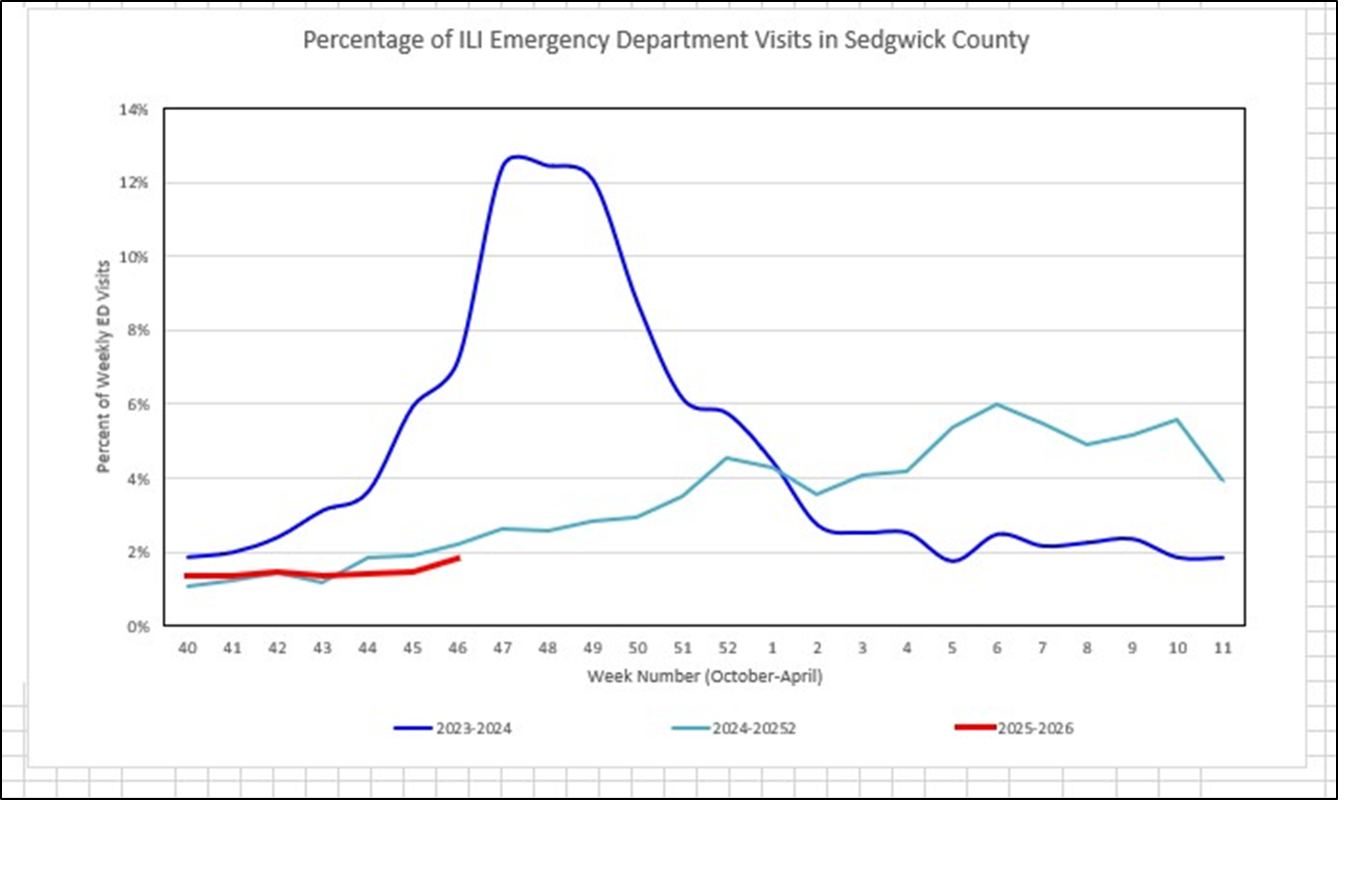
- Seasonal influenza activity in Sedgwick County continues to increase, primarily driven by early activity of influenza A.
- Emergency Department visits for influenza-like illness (ILI) in the county are currently at .02%, indicating a gradual increase in community transmission.
What's the Difference?
The common cold is mostly caused by the rhinovirus. People usually have milder symptoms: a runny nose, slight cough.
In most cases, if you have a cold, you’re still able to function,
| PREVENTION |
|---|
|
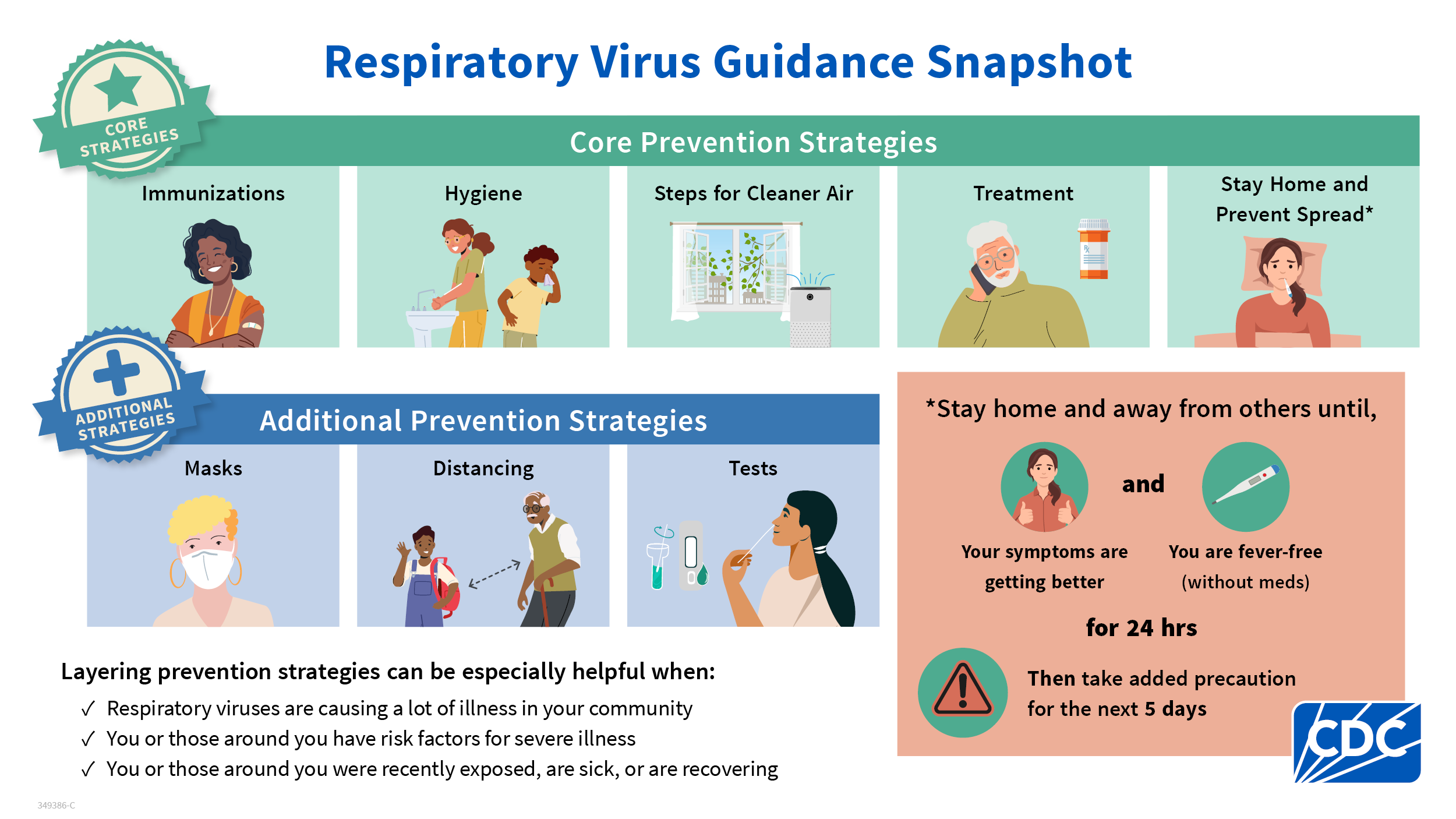
Remember the three Cs to help prevent any respiratory virus.
|
| SYMPTOMS |
|---|
|
HOW DOES A COLD SPREAD?
- A cold spreads through droplets from an infected person when they cough, sneeze, or talk or if they touch something and leave germs.
- You can "catch a cold" by being near someone who has a cold or by touching something that has the virus on them and then touching your eyes, nose, or mouth.
Additional Resources

The flu is caused by the influenza virus. Seasonal flu typically starts in the fall and lasts through the spring.
HOW DOES THE FLU SPREAD?
The flu spreads through droplets from an infected person when they cough, sneeze, or talk or if they touch something and leave germs.
- The flu spreads by being near someone who has the flu or by touching something that has the virus on it and then touching your eyes, nose, or mouth.
| SYMPTOMS |
|---|
|
Flu is not just a common cold. It usually comes on suddenly, and people with flu may have some or all of the following symptoms (think F.A.C.T.S.)
(Reproduced from https://www.nfid.org/infectious-disease/flu) |
| PREVENTION |
|---|
| The best way to protect yourself and your family against flu, especially more severe illness, is by getting vaccinated. |
|
Additional Resources
COVID-19 is caused by severe acute respiratory syndrome coronavirus 2 (SARS-CoV-2).
HOW DOES COVID-19 SPREAD?
COVID-19 can spread through droplets from an infected person when they cough, sneeze, or talk.
It can also be spread by infected people who do not have symptoms. This means that even people who feel healthy and do not have symptoms can still spread the virus to others.
| SYMPTOMS |
|---|
Because the symptoms are similar to other viruses, you should consider getting tested if you think you may have COVID-19.
|
| PREVENTION |
|---|
|
|
Additional Resources
RSV is caused by the respiratory syncytial virus. Most people have cold-like symptoms, but it can be severe for babies and some adults.
RSV is the #1 reason babies under 1 year old are hospitalized.
HOW RSV SPREADS
RSV spreads when an infected person coughs or sneezes, by direct contact (kissing. sharing food/drink, etc.) with someone who has RSV, or by touching a contaminated surface (doorknobs, etc.).
| SYMPTOMS |
|---|
|
| PREVENTION |
|---|
|
PREGNANCY & NEWBORNS
*Most babies only need one, not both. Talk to your healthcare provider to be sure. |
|
CHILDREN
|
|
ADULTS
|
Additional Resources
- RSV Fact Sheet
- RSV in Infants & Young Children: English Flyer (PDF)| Spanish Flyer (PDF)
Resources